
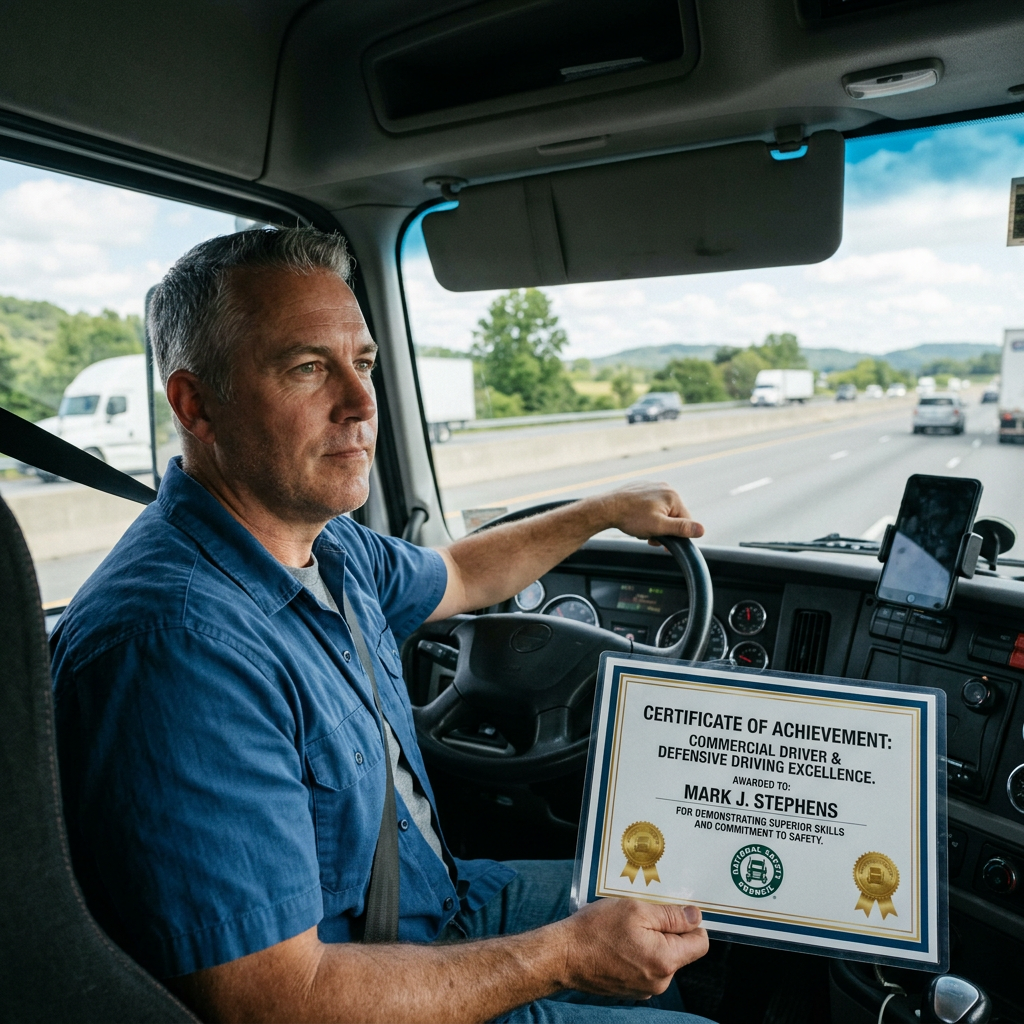
Course Code: CDD-106
Target Audience: Personal Chauffeurs, Executive Drivers, Shuttle Operators, Commercial Van Drivers, and Transport Personnel
Course Duration: 16 Hours (2 Days Intensive or 4 Modules)
Instructional Method: 40% Classroom Theory & Hazard Perception / 60% Behind-the-Wheel Driving Evaluation & Vehicle Inspections
Module Overview
This comprehensive training module prepares professional drivers to operate commercial and passenger vehicles safely, efficiently, and courteously. Candidates will master defensive driving techniques, pre-trip vehicle safety inspections, passenger comfort and VIP protocols, route planning, emergency handling, and fuel-efficient driving habits.
Module Breakdown
Section 1: Pre-Trip Inspection, Vehicle Safety & Maintenance Controls
- Pre-Trip Safety Inspection Routine (Circle Check):
- Exterior: Tires (tread depth, pressure, lug nuts), lights/signals, glass, mirrors, wipers, and under-vehicle fluid leaks (oil, coolant, brake fluid).
- Under the Hood: Oil level, power steering fluid, washer fluid, belt condition, and battery terminals.
- Interior & Cabin: Seatbelts, horn, dashboard warning indicators, mirror adjustments, and pedal responsiveness.
- Emergency Equipment Verification: Securing fire extinguishers, warning triangles/reflectors, high-visibility safety vests, first aid kits, and tire change tools.
- Cargo & Passenger Weight Balance: Understanding gross vehicle weight limits, securing loose luggage in trunks/hatches, and ensuring even weight distribution.
Section 2: Defensive Driving Mechanics & Hazard Perception
- Space Management & Following Distance:
- The 4-Second Rule under normal road conditions; expanding to 6–8 seconds in severe weather, heavy rain, or high-speed motorways.
- Maintaining a buffer zone: keeping safe lateral spacing and leaving an “escape route” in multi-lane traffic.
- Observation & Scanning Techniques (The Smith System):
- Aim High in Steering: Look 15–20 seconds ahead down the road.
- Get the Big Picture: Scan mirrors every 5–8 seconds and monitor blind spots continuously.
- Keep Your Eyes Moving: Avoid highway hypnosis and tunnel vision; scan intersections before entry.
- Leave Yourself an Out: Surround the vehicle with open space buffers.
- Make Sure They See You: Use signals early, position headlights appropriately, and use gentle horn taps when necessary.
- Speed Management & Stopping Distances: Understanding how vehicle weight dramatically increases total stopping distance (Perception Distance + Reaction Distance + Braking Distance).
[ Perception Distance ] ──► [ Reaction Distance ] ──► [ Braking Distance ] = Total Stopping Distance │[ Heavy Vehicle / Rain ] ◄── Multiply Total Distance by 1.5x to 2x ◄──────────────┘
Section 3: Passenger Safety, VIP Chauffeur Etiquette & Smooth Vehicle Control
- Smooth Driving Mechanics: Operating acceleration, braking, and steering controls smoothly to eliminate sudden g-force shifts for passenger comfort.
- VIP Chauffeur & Executive Transport Protocols:
- Vehicle door opening/closing etiquette and umbrella assistance during adverse weather.
- Temperature control, interior ambient lighting, and passenger climate/radio preferences.
- Maintaining strict confidentiality regarding passenger conversations and schedules.
- Special Passenger Care: Assisting elderly passengers, mobility-impaired guests, or children; securing child safety seats correctly according to legal standards.
Section 4: Route Planning, GPS Navigation & Eco-Driving Efficiency
- Pre-Trip Route Planning: Checking traffic reports, construction delays, toll gates, and low-clearance bridges prior to departure.
- Distracted Driving Prevention: Strict policy on zero hands-on mobile phone usage while driving; utilizing voice-guided GPS or mounting navigation devices at eye level before turning the key.
- Eco-Driving Principles:
- Eliminating unnecessary engine idling (reducing fuel consumption and engine wear).
- Anticipating traffic flow to avoid sudden braking and rapid accelerations.
- Maintaining optimal tire pressure to maximize fuel economy.
Section 5: Emergency Maneuvers, Collision Avoidance & Incident Management
- Adverse Weather & Road Conditions: Driving in heavy rain, fog, sandstorms, or slick road surfaces; managing hydroplaning by easing off the accelerator without slamming brakes.
- Vehicle System Failures:
- Tire Blowout: Maintain firm grip on steering wheel, do not slam brakes, ease off gas, and steer safely to the shoulder.
- Brake Failure: Pump foot brakes, shift down to lower gears, and utilize the parking/emergency brake gradually.
- Post-Accident Action Plan:
- Secure the scene: turn on hazard lights, pull off active traffic lanes if possible, and set up warning triangles.
- Render first aid and call emergency services immediately.
- Document details: collect third-party driver information, photograph vehicle damage/scene, and complete the company Accident Report Form.
Practical Competency Assessment Sheet
Student Name: ___________________________
Date: _______________
Assessor: ___________________________
| Evaluation Criteria | Target Metric / Requirement | Pass | Fail |
| Pre-Trip Inspection | Systematically performs a full exterior, under-hood, and cabin safety check using the pre-trip checklist. | □ | □ |
| Space Management | Maintains a minimum 4-second following distance and demonstrates proper mirror scanning every 5–8 seconds during road test. | □ | □ |
| Smooth Vehicle Control | Executes smooth accelerations, turns, and stops without jarring passenger movement or causing luggage shifts. | □ | □ |
| Parallel Parking & Reversing | Reverses safely using side mirrors and backing guide lines, parking within 30 cm of the curb without hitting obstacles. | □ | □ |
| VIP Passenger Etiquette | Demonstrates proper door opening, greeting protocol, climate control setting, and luggage loading techniques. | □ | □ |
| Emergency Response Oral Exam | Correctly explains exact steps for handling a sudden high-speed tire blowout and post-collision procedures. | □ | □ |