
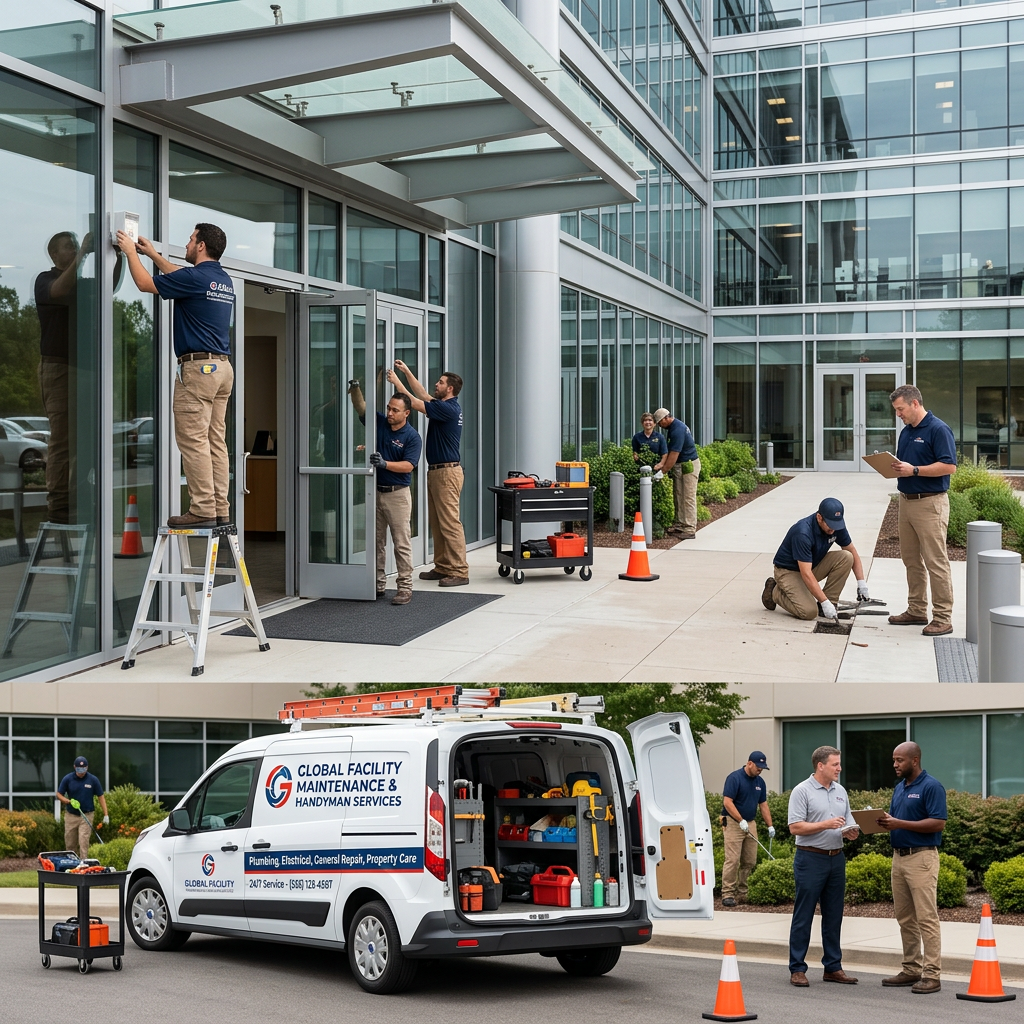
Course Code: CFM-105
Target Audience: Facility Support Technicians, Building Maintenance Staff, Handyman Service Personnel, and Residential/Commercial Property Caretaker Staff
Course Duration: 24 Hours (3 Days Intensive or 6 Modules)
Instructional Method: 25% Theory & Safety Standards / 75% Practical Workshop & Hands-on Troubleshooting Drills
Module Overview
This practical training module equips maintenance personnel with essential technical skills across electrical troubleshooting, basic plumbing repairs, carpentry, drywall repair, HVAC preventive maintenance, and building safety inspections. Candidates will learn to execute routine upkeep, handle minor emergency repairs, and maintain commercial and residential properties efficiently and safely.
Module Breakdown
Section 1: Workplace Safety, Tool Mastery & PPE
- General Hazard Awareness: Performing job safety analyses (JSA), identifying slip/trip/fall hazards, and establishing work area isolation using caution tape and safety cones.
- Personal Protective Equipment (PPE): Proper selection and maintenance of steel-toe non-slip footwear, safety glasses/goggles, cut-resistant gloves, ear protection, and dust masks/respirators.
- Hand & Power Tool Safety:
- Inspection, safe operation, and maintenance of cordless drills, impact drivers, circular saws, angle grinders, oscillating tools, and multi-meters.
- Extension cord safety, grounded tools, and Ground Fault Circuit Interrupter (GFCI) protection.
- Ladder & Working at Heights Safety:
- Selection of ladder types (Fiberglass vs. Aluminum) near electrical hazards.
- The 4-to-1 ratio setup rule for extension ladders and proper step-ladder deployment.
Section 2: Basic Electrical Troubleshooting & Maintenance
- Electrical Safety Protocols: Lockout/Tagout (LOTO) basics, testing for zero voltage using non-contact voltage testers and digital multimeters before touching wires.
- Lighting Systems Maintenance:
- Replacing bulbs, ballast-to-LED driver retrofits, and installing LED panel lights.
- Replacing damaged commercial light fixtures and motion sensor switches.
- Outlets, Switches & Circuit Care:
- Wiring and replacing standard wall switches, 3-way switches, and duplex outlets.
- Testing, resetting, and replacing GFCI outlets in high-moisture zones (bathrooms, kitchens, outdoor areas).
- Resetting tripped circuit breakers in sub-panels safely.
[ Verify Circuit at Breaker Panel ] ──► [ Apply Lockout/Tagout (LOTO) ] ──► [ Test Zero Voltage with Multimeter ] │[ Test & Re-energize Circuit ] ◄── [ Re-assemble & Inspect Cover ] ◄── [ Replace Device / Wiring ]
Section 3: Commercial Plumbing Systems & Fixture Repair
- Water Supply Isolation: Locating and operating main shut-off valves, angle stops, and fixture isolation valves during pipe or fixture leaks.
- Drainage & Clog Clearance:
- Unclogging sinks, urinals, and toilets using hand augers (snakes), plungers, and cleanout ports.
- Disassembling, cleaning, and replacing P-traps and pop-up drain assemblies.
- Fixture Maintenance & Seal Replacements:
- Repairing running toilets: replacing fill valves, flush valves, flappers, and flushometer cartridges (commercial sensor toilets).
- Replacing faucet cartridges, aerators, O-rings, and braided supply lines.
- Re-caulking sinks, bathtubs, and backsplashes using mold-resistant silicone sealant.
Section 4: Carpentry, Drywall Repair & Surface Restoration
- Drywall Patching & Wall Repair:
- Repairing small nail holes, medium dents, and large holes using mesh tape, joint compound (mud), and drywall patches.
- Feathering, sanding, priming, and color-matching paint for seamless spot repairs.
- Door Hardware & Cabinet Repair:
- Adjusting, aligning, and repairing commercial door hinges, door closers, and panic bars.
- Replacing door knobs, lever handles, deadbolts, and electronic door locks.
- Re-aligning cabinet doors, replacing concealed hinges, and fixing drawer slides.
- Floor & Trim Repairs: Replacing damaged baseboards, repairing loose carpet transitions, and replacing vinyl tile (VCT) or laminate planks.
Section 5: HVAC Preventive Maintenance & Building Inspections
- Routine HVAC Air Handler Care:
- Inspecting, sizing, and replacing air filters (MERV ratings and airflow direction).
- Cleaning evaporator/condenser coils, clearing condensate drain lines, and replacing condensate pump floats.
- Replacing blower fan belts and checking belt tension/alignment.
- Preventive Facility Inspection Routines:
- Executing daily/weekly building rounds using digital preventive maintenance checklists.
- Inspecting emergency lighting, exit signs (battery backup testing), and fire extinguisher pressure gauges.
- Documenting work orders, recording spare parts usage, and reporting major structural or mechanical issues to facility managers.
Practical Competency Assessment Sheet
Student Name: ___________________________
Date: _______________
Assessor: ___________________________
| Evaluation Criteria | Target Metric / Requirement | Pass | Fail |
| Electrical Safety & LOTO | Executes voltage-zero test using multimeter and installs lockout lock before replacing a wall switch. | □ | □ |
| GFCI Outlet Replacement | Correctly wires line vs. load terminals on a GFCI outlet and tests trip function successfully. | □ | □ |
| Flushometer / Toilet Repair | Successfully replaces a flush valve diaphragm/cartridge and stops a running commercial toilet leak. | □ | □ |
| Drywall Patch & Finish | Patches a 4-inch hole in drywall using backing, mesh tape, and joint compound to a smooth sandable finish. | □ | □ |
| Door Closer Adjustment | Adjusts latching and sweeping speed screws on a commercial hydraulic door closer to proper close rate. | □ | □ |
| HVAC Filter & Drain Service | Replaces filter facing correct airflow direction and clears a clogged condensate line using vacuum/flush tool. | □ | □ |